• ABOUT
      Initiative Director:

      Elijah Huge
      Assistant Professor of Art,
      Assistant Professor of Environmental Studies


      Center for the Arts
      Wesleyan University
      283 Washington Terrace
      Middletown, CT 06459

      T: +1 860 685 3526

      F: +1 860 413 2061


      E-Mail:
      northstudio|at|wesleyan.edu


      A nationally-recognized design laboratory, North Studio operates as a contemporary variation on the traditional Beaux-Arts model of architectural practice and education. Focused on developing and producing research and conceptually driven projects with non-profit and public collaborators, the Studio is at once a locus for undergraduate design education within the context of Wesleyan University’s liberal arts curriculum and a multi-disciplinary design group committed to seeing work built. Situated in the Department of Art & Art History and housed in Wesleyan University's historic Center for the Arts (CFA), North Studio was initiated in 2006 by architect Elijah Huge.

      Exploring potential relationships between architecture and landscape, each project undertaken by the Studio is expected to balance three objectives: the production of relevant design research, real-world testing of ideas incubated in the studio, and the implementation of situation-specific, environmentally-responsive work. North Studio projects have won two national AIA awards and have been featured in Landscape Architecture, Architectural Record, Dwell, the Journal of Architectural Education, and The Chronicle of Higher Education.
  • RECENT
      12.29.2010
      North Studio pages now on Facebook and Architizer

      06.05.2010
      Splitframe wins AIA Small Projects Award (Honor)
      will join Wesleyan Sukkah in exhibition at
      AIA National Convention, Miami, 06/08-12/2010

      2.24.2010
      Contrived Environments
      Elijah Huge, Lecture at Rutgers School of Environmental
      and Biological Sciences

      12.15.2009
      Splitframe awarded CT DEP Green Circle Award

      11.05.2009
      Architecture After the Well-Tempered Environment
      Elijah Huge, Panel Presentation at Brown University
      Cogut Center for the Humanities

      09.17.2009
      Contrived Environments
      Elijah Huge, Lecture at University of Hartford
      School of Architecture

  • LINKS
      Department of Art & Art History
      Center for the Arts
      College of the Environment

      +++++ Collaborators
      Wesleyan Center for Jewish Life
      Mattabeseck Audubon Society
      Green Street Arts Center

      +++++ Affiliates
      Elijah Huge: Periphery Architecture
      Angus McCullough
  • Wesleyan Sukkah
    • 1
    • 2
    • 3
    • 4
    • 5
    • 6
    • 7
    • VIDEO
      You need Flash player 8+ and JavaScript enabled to view this video.
    • T
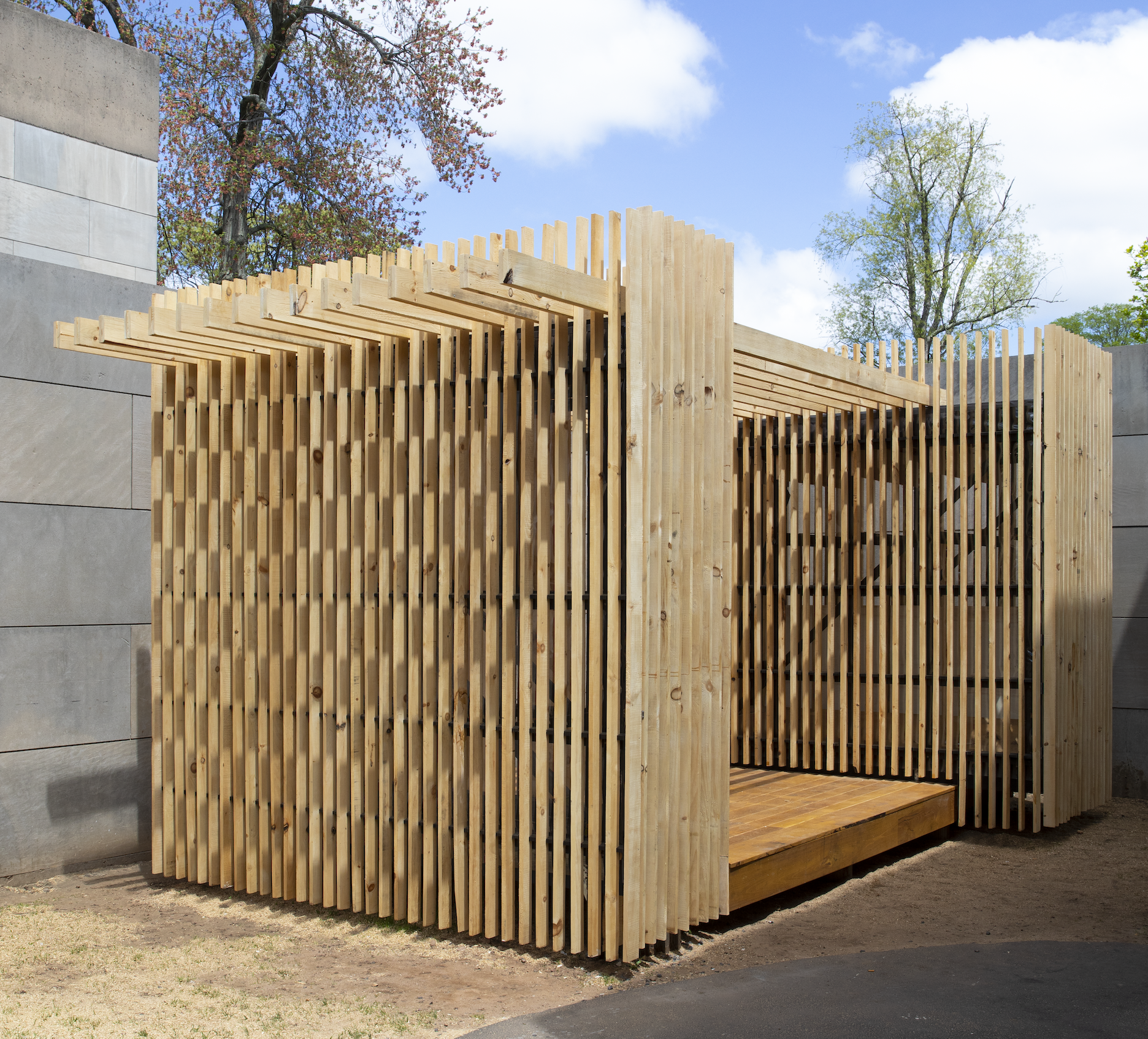
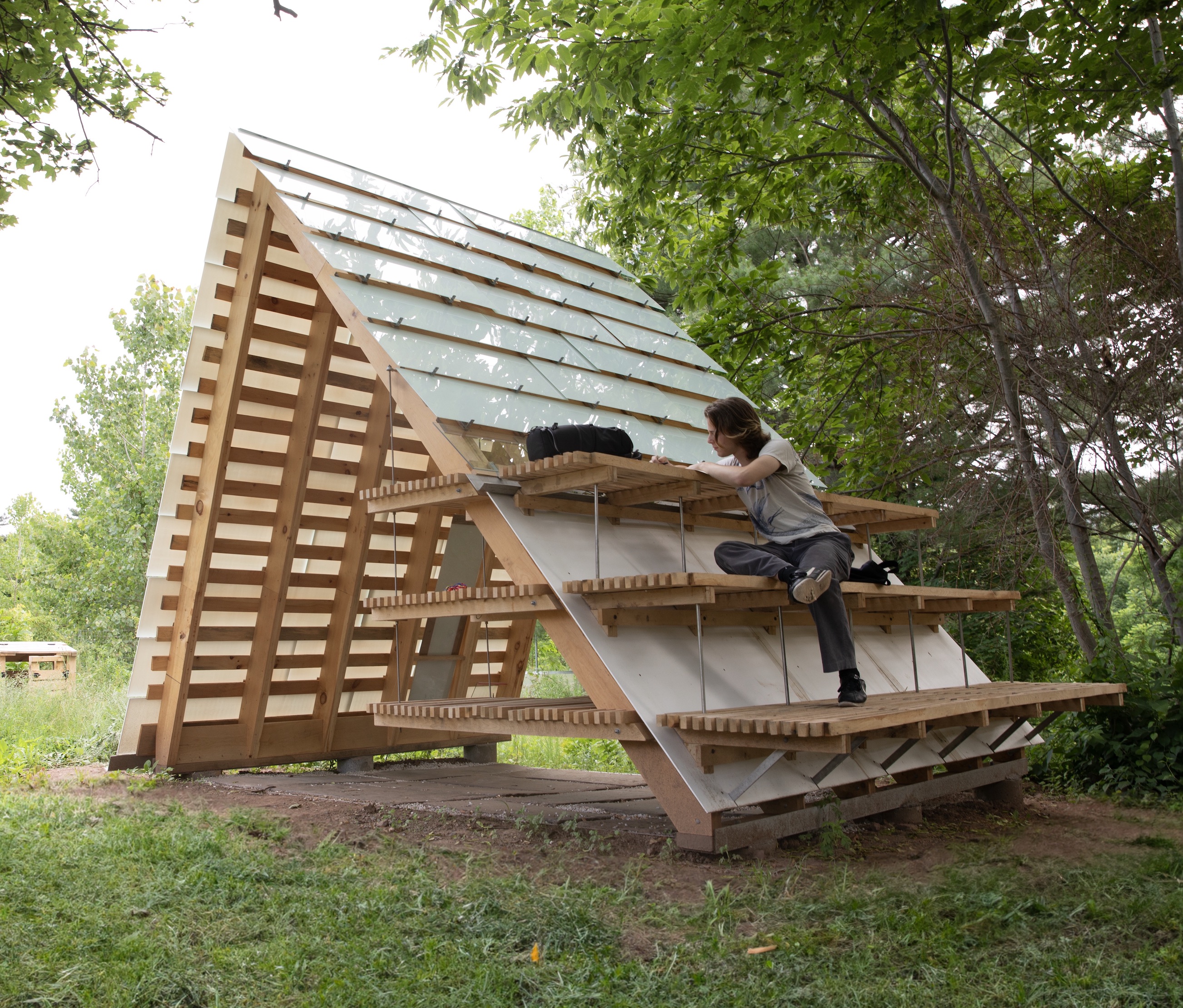
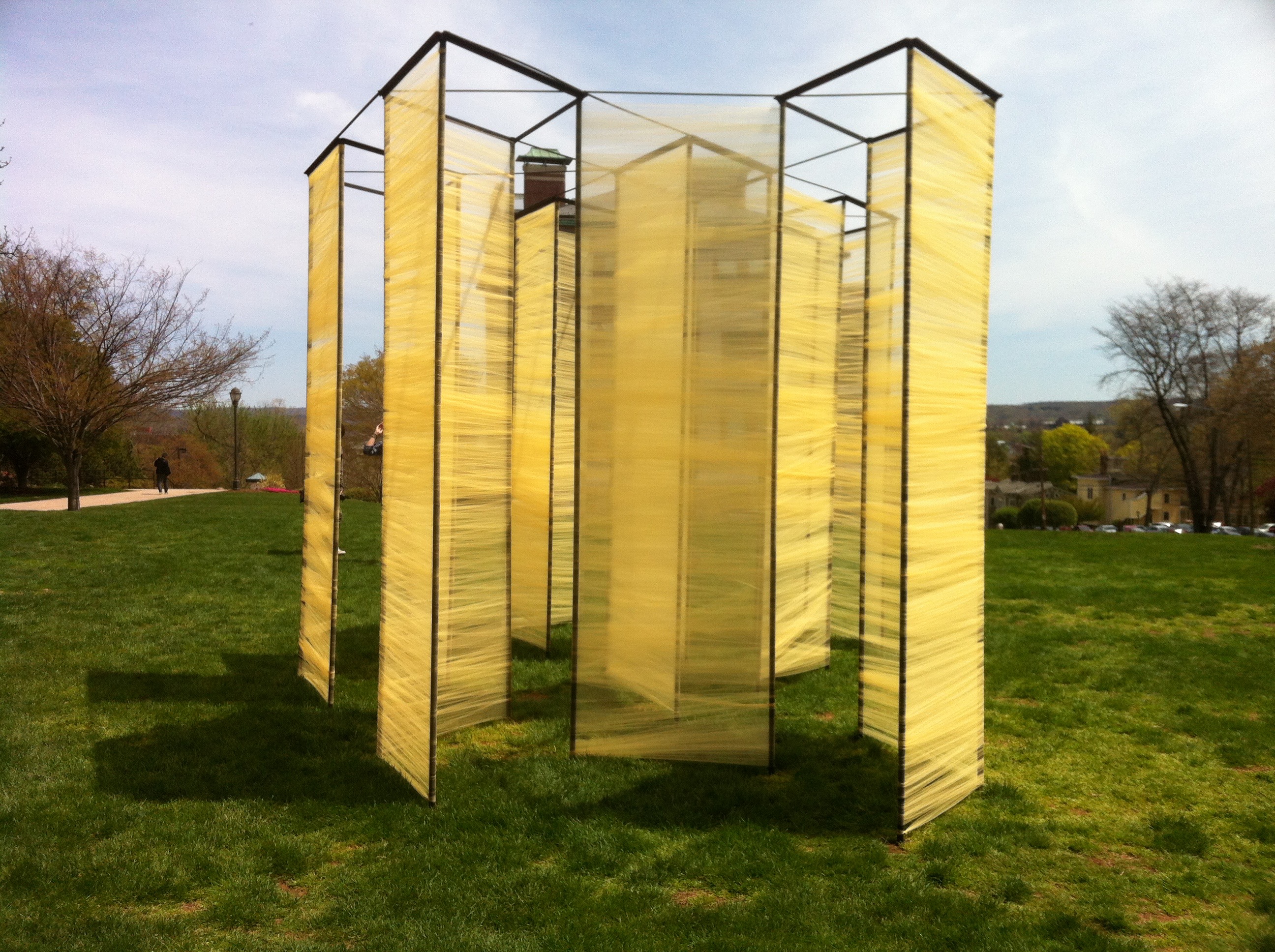
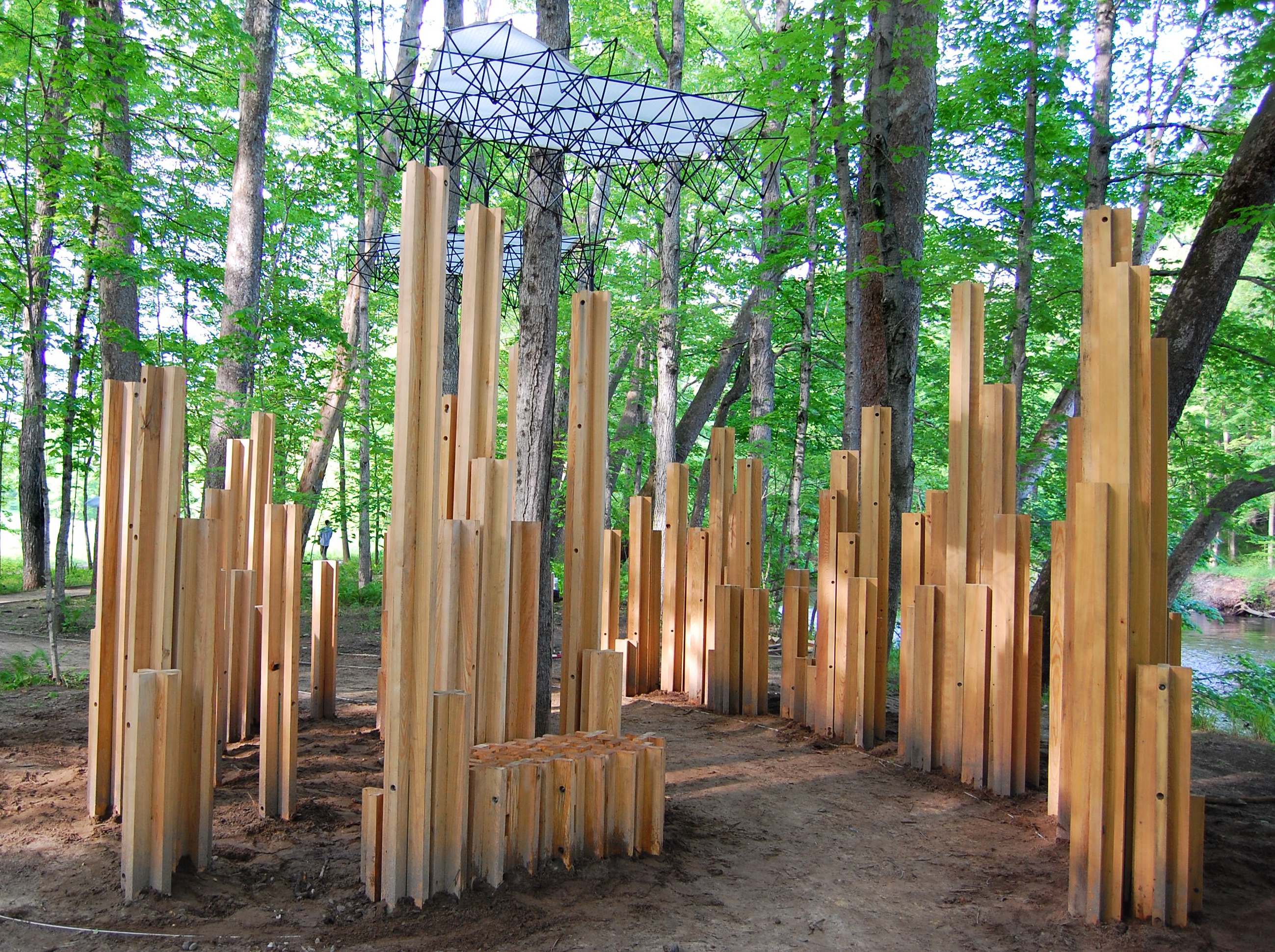
      Wesleyan University Sukkah

      awards: Faith & Form Award (Honor): Sacred Landscape (Faith & Form Magazine and the American Institute of Architects)

      Proposition: A temporary structure erected every fall for Sukkot – the annual feast of tabernacles – the sukkah offers students a place to pray, study, eat, sleep, dwell, and socialize. The client needed the structure to accommodate these activities, also emphasizing that the sukkah be welcoming to all and, finally, that it be halachic - built to the specifications of the rabbinic code.

      Project: In the spring of 2009, North Studio worked with Wesleyan’s Center for Jewish Life to create a new university sukkah. In response, North Studio designed and built a structure to harmonize with the surrounding landscape - to be inviting, approachable, and intriguing to anyone walking by - while simultaneously maintaining the “intentional sacred space” and privacy expected for the sukkah’s religious users. Beyond the requirements for its religious use, the Wesleyan Sukkah also needed to accommodate 50 people, withstand outdoor exposure, repeated assembly and disassembly, and store easily.

      Coda: The final design is sited at the top of a hill at the center of campus that is both serene and social. The Sukkah’s simplicity of construction and ephemeral tectonics reinforce its historical ties to nomadic huts, while its explicit impermanence encourages both introspection on the fragility of human life and an awareness of the vastness of the built and natural world of which it is a part.

      North Studio Project Team: Elijah Huge (Assistant Professor, North Studio Initiative Director), Megan Nash ('09, Teaching Apprentice), Alexandra Bean (‘11), Saul Carlin (‘09), McLean Denny (‘11), Gideon Finck (‘11), Celia Hollander (‘11), Daniel Keller (‘11), Stephanie Lee (‘11), Rosa McElheny (‘11), Alexander Mercuri (‘11), Cameron Rowland (‘11), Elana Scudder (‘11), Benjamin Stockman(‘11), Gabriel Tomasulo (‘11), April Trovillion (‘10), Emily Tyrer (‘10)
      September 2009, Middletown, CT

  • Bundalow
    • 1
    • 2
    • 3
    • T
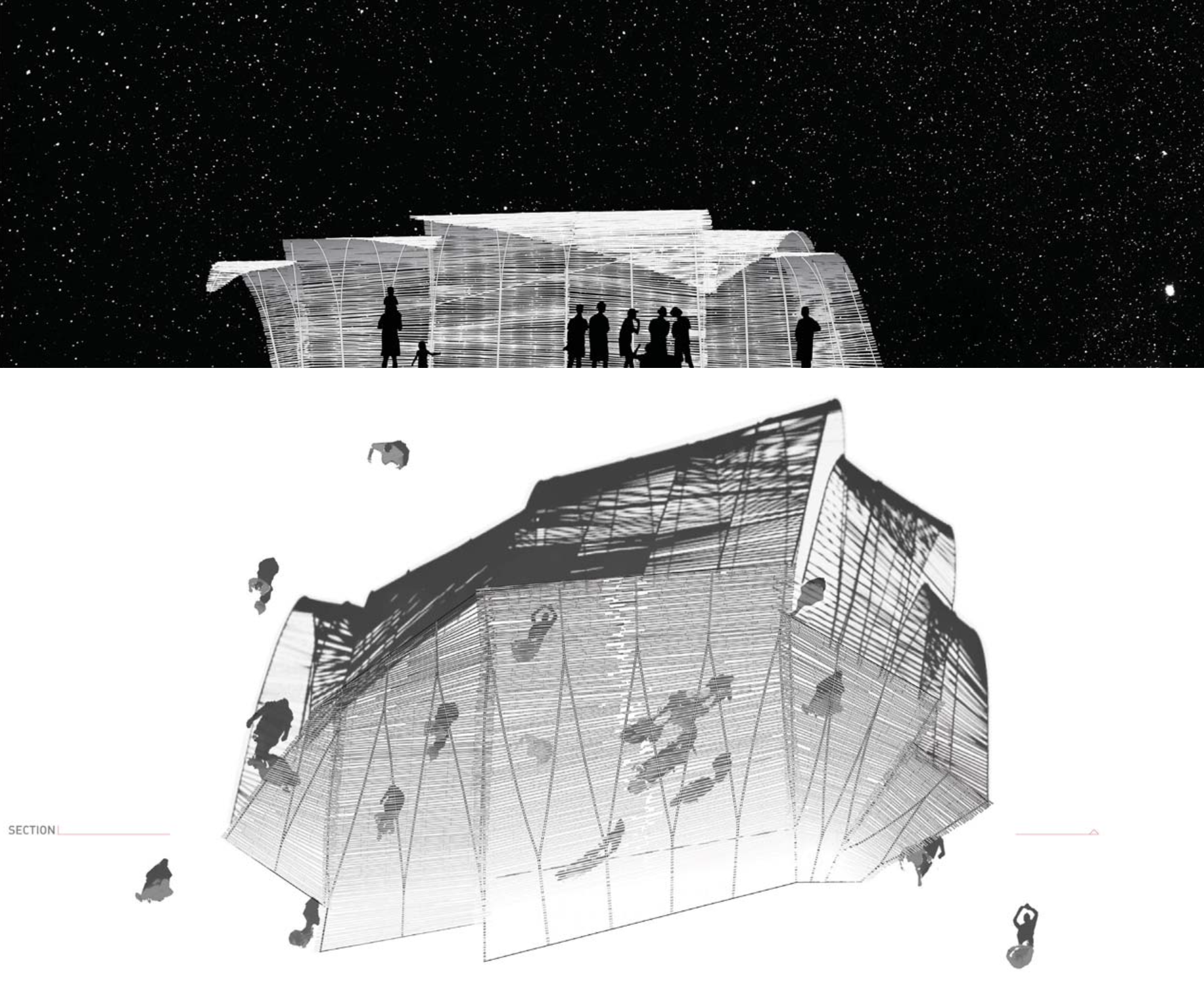
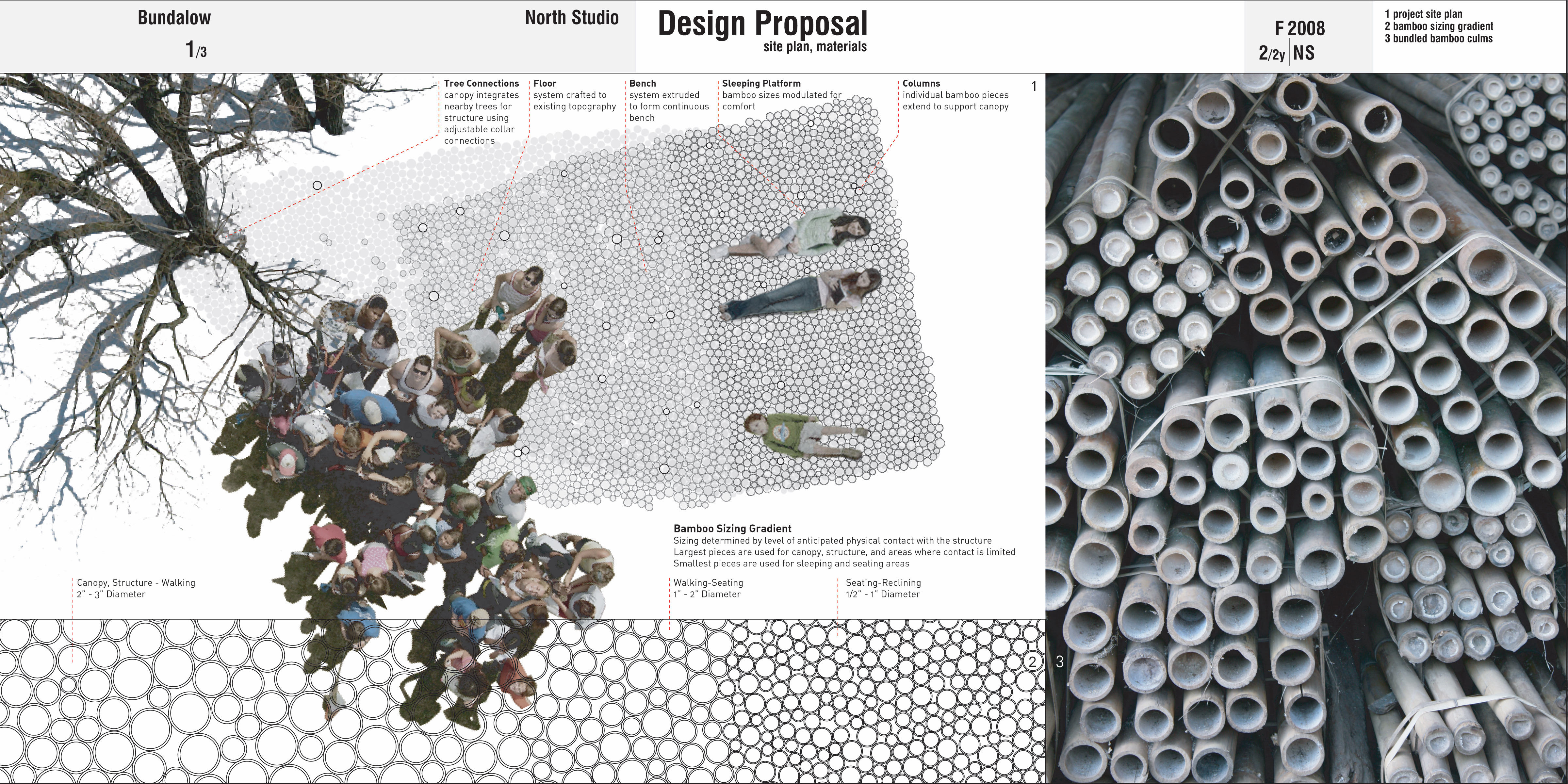
      Bundalow: Temporary Woodland Shelter Design Competition Proposal

      awards: Finalist, Sustainably Designed Structures in an Urban Woodland Design Competition, Schuylkill Center for Environmental Education

      exhibitions: Gimme Shelter: Sustainably Designed Structures in an Urban Woodland, Philadelphia Center for Architecture, Philadelphia, PA

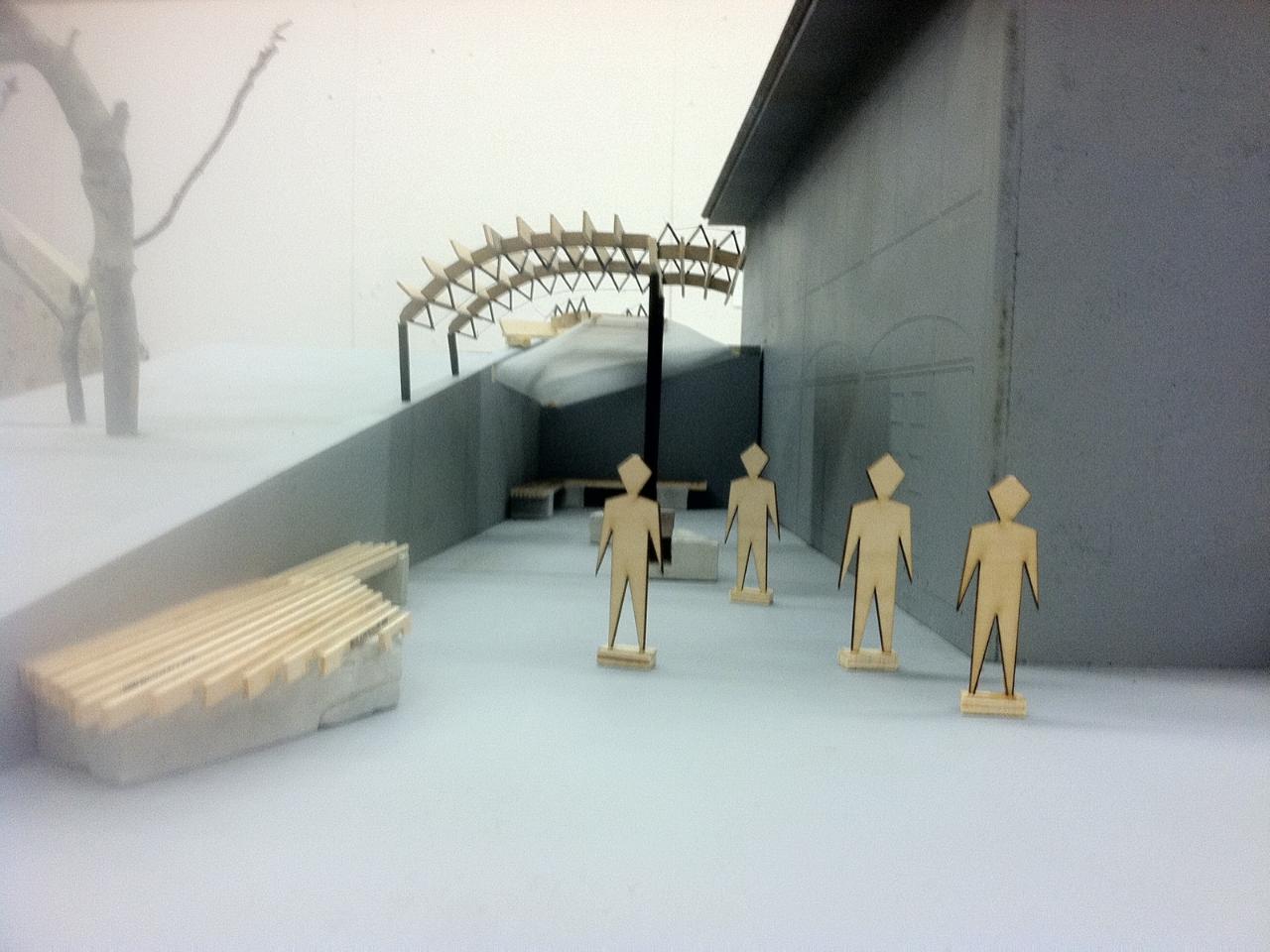
      Bundalow interprets shelter as a careful modulation of two topographies: the ground and the tree canopy.

      Using a pair of thick, undulating surfaces to mediate the relative openness provided by the ground and canopy of the site, rather than as a room or an architectural enclosure, the structure seeks to facilitate specific activities (sleeping, sitting, watching) without precluding a direct visual and experiential relationship with the site as a whole. This is accomplished both by using the plinth as a transitional surface from the site’s existing topography and by modulating the structure’s canopy according to the level of overhead weather protection required. Extending the topography of the site, the structure’s surfaces work in tandem to shelter occupants overhead and to support them from below.

      The flexible system used to produce Bundalow allows the structure to be highly crafted to specific site or installation conditions, including topography, trees and overhead canopy, and visibility, This responsiveness to site-specific variables facilitates not only integration with the existing project site, but also provides a direct and tangible physical connection with the area where the structure is assembled. Drawing attention to the ways in which canopy and ground are experienced, rather than by producing an architectural interior or a space that is distinct and divided from the ground beneath it or the canopy above it, Bundalow facilitates an immersive experience on the site.

      North Studio Project Team: Elijah Huge (Assistant Professor, North Studio Initiative Director), Angus McCullough (‘10)

  • SplitFrame
    • 1
    • 2
    • 3
    • 4
    • 5
    • 6
    • T
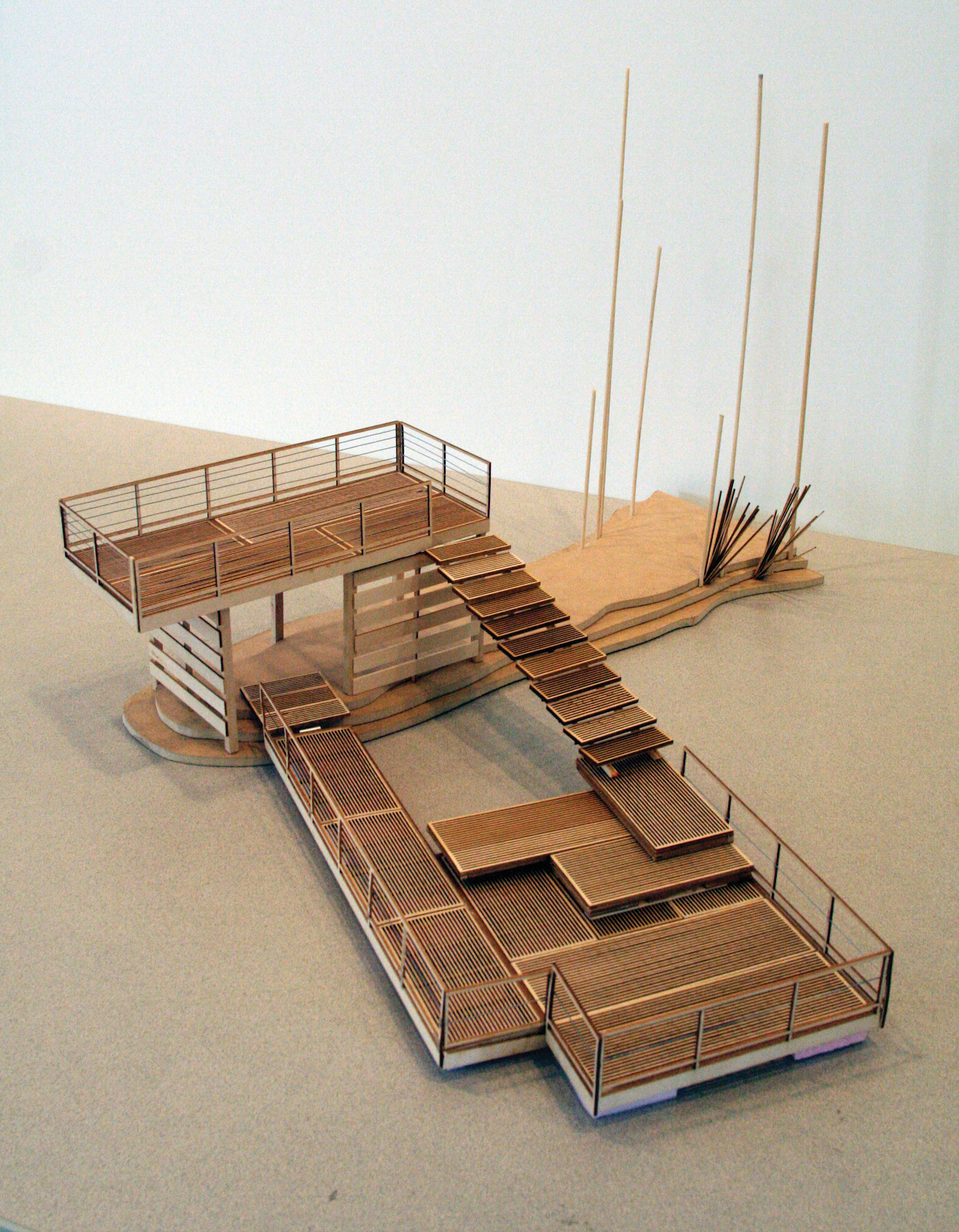
      SplitFrame: Audubon Wildlife Viewing Platform

      publications: Architectural Record, Dwell, Landscape Architecture, Journal of Architectural Education

      awards: AIA Small Projects Award (Honor), Green Circle Award: Connecticut Department of Environmental Protection

      exhibitions: Global Warming: Artists and Climate Change, Zilkha Gallery, Middletown, CT

      Proposition: The site - a wildlife sanctuary formerly used as a commercial cranberry bog - had been flooded by a family of beavers and was largely underwater. The Audubon Society sought a means to regain access to the site and interact with the range of its shifting conditions.

      Project: SplitFrame is a wildlife-viewing structure designed and constructed to maximize environmental exposure while minimizing impact. At the core of the project are two integral pieces - a floating Observation Deck and an elevated Viewing Station - connected via a hinged staircase, allowing the Observation Deck to rise and fall with the seasonal change in water levels. The project is situated at the end of a long berm, a vestige of the wildlife sanctuary’s former use as a commercial cranberry bog. This existing berm was integrated into the project as an access path, drawing visitors out over the water, under the Viewing Station, and onto a ramp to the Observation Deck.

      Coda: Informed by research on sustainable construction technologies and building materials, design precedents, and the project’s 19-acre site, SplitFrame was undertaken as a collaborative research/design/build project involving 15 undergraduate architecture students, the design studio instructor, two ornithology research scientists, and the Audubon Society client. Students learned ways to focus and apply design research, manage a limited budget, limited materials, and limited site access, while the client regained access to the sanctuary.

      North Studio Project Team: Elijah Huge (Assistant Professor, North Studio Initiative Director), Zachary Bruner (Teaching Apprentice, '08), Jason Bailey (‘09), Hunter Craighill (‘09), Henry Ellis (‘10), Nicole Irizarry (‘09), Yang Li (‘10), Angus McCullough (‘10), Megan Nash (‘09), Rebecca Parad (‘09), Arkadiusz Piegdon (‘08), Derek Silverman (‘09), Julia Torres (‘08), Renae Widdison (‘10), Yale Ng-Wong (’10),

  • Green Street Arts Center
    • 1
    • 2
    • 3
    • 4
    • T
      Green Street Arts Center Outdoor Classroom/Urban Garden

      publications: Journal of Architectural Education

      Proposition: Enhanced visual, physical, and perceptual accessibility of the Green Street Arts Center (GSAC) in downtown Middletown, CT, for both neighborhood residents and the community at large.

      Project: Through an analysis of the Arts Center’s existing parking lot, it was determined that the drive aisles were significantly oversized and a prospective 12’x48’ site was “found.” The Green Street Arts Center Outdoor Classroom/Urban Garden project began with a Playbook prepared by the North Studio initiative and developed through consultations with Arts Center staff, the North End neighborhood Action Team, and independent site analysis. Among the proposals in the Playbook, an outdoor classroom was proposed as an urban garden which would mediate the hard edges of the Center’s parking lot and the building.

      Coda: Extending the programming of the Arts Center outside the confines of its architectural enclosure and into the neighborhood, the classroom/garden provided much-needed outdoor educational space for the Center’s after-school programs. The project was adopted and funded by the city’s Department of Public works and built in Spring 2010, in time for a first wave of plantings.

      North Studio Project Team: Elijah Huge (Assistant Professor, North Studio Initiative Director),
      Phase I: Joshua Aronson (’07), Allison Torpey (‘07), Renae Widdison (‘10),
      Phase II: Joshua Pavlacky (’08) Hunter Craighill (‘09) Renae Widdison (‘10)


NORTH STUDIO at Wesleyan University
283 Washington Terrace, Middletown, CT 06459
built with Notepad.exe
North Studio on Facebook
North Studio on Architizer